
Holiday shopping can produce excellent prices, but the environment is designed to encourage fast decisions. Countdown timers, large discount percentages and limited-stock messages make it easy to focus on urgency instead of value. Before buying, define the product or features you actually need and set a target price.
Compare the exact product
Retailers sometimes list different configurations under similar names. For a laptop, confirm the processor, memory, storage and screen. For a television, check the complete model number rather than just the size and brand. Compare the same configuration and condition across reputable sellers.
Question the reference price
A claimed discount may be calculated against a manufacturer's suggested price rather than the price shoppers have routinely paid. Where price history is available, compare the offer against recent selling prices. Otherwise, compare several reputable sellers and use your target price as the decision boundary. Include shipping, taxes, required accessories and subscriptions.
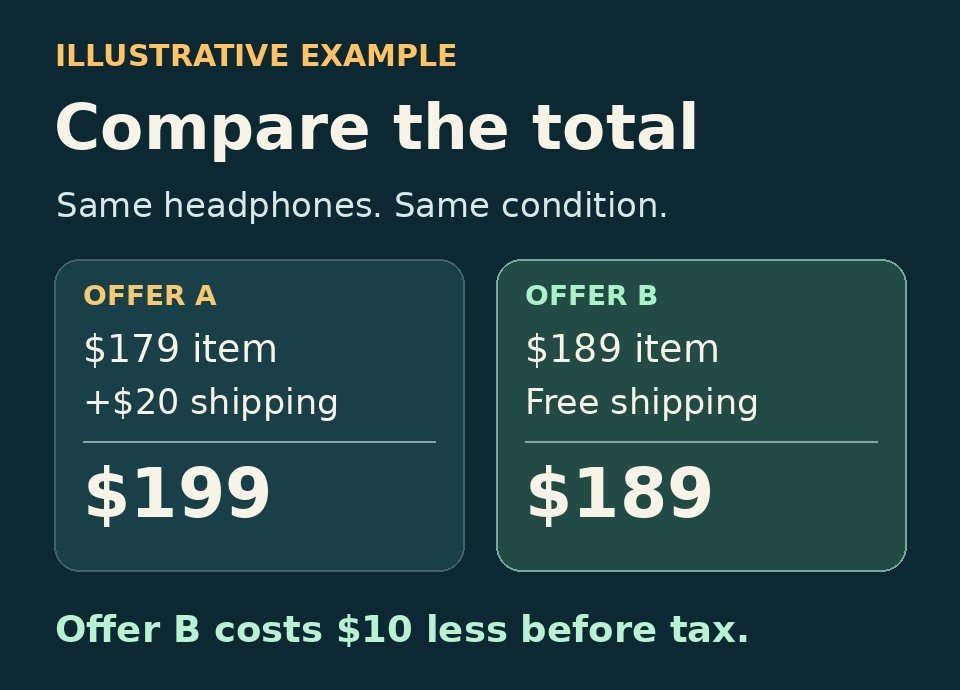
Illustrative example: The same headphones in the same condition cost $179 plus $20 shipping at one store, and $189 with free shipping at another. Before tax, that’s $199 versus $189. The higher sticker price costs $10 less once you include shipping.
Make your shopping list before opening the sales pages
Divide potential purchases into things you need, things you would buy at the right price and things you are simply curious about. Set a budget for each. Check the return window, warranty coverage and actual seller, especially for marketplace listings and refurbished products.
The TechieDeals Take
A strong holiday deal is a product you wanted before the sale, from a trustworthy seller, at a demonstrably attractive price. Don't let a countdown or percentage-off badge make the decision for you.